Understanding Other Cultures: A Princeton Travel Course
What do we do in order to understand people who are different from us?
What do we do in order to understand people who are different from us? How do we learn from people who come from minoritized cultures? Can we free our perception of those people from our biases?
Understanding other or foreign cultures is a classic topic in mission, ministry, and theology. In today’s multicultural and globalizing societies, this matter is more and more advanced – from a mere theoretical approach to an urgent necessity in the face of society’s integration, and the world becoming a global village, to a fully developed course of study in a theological institution.
Princeton Travel Course
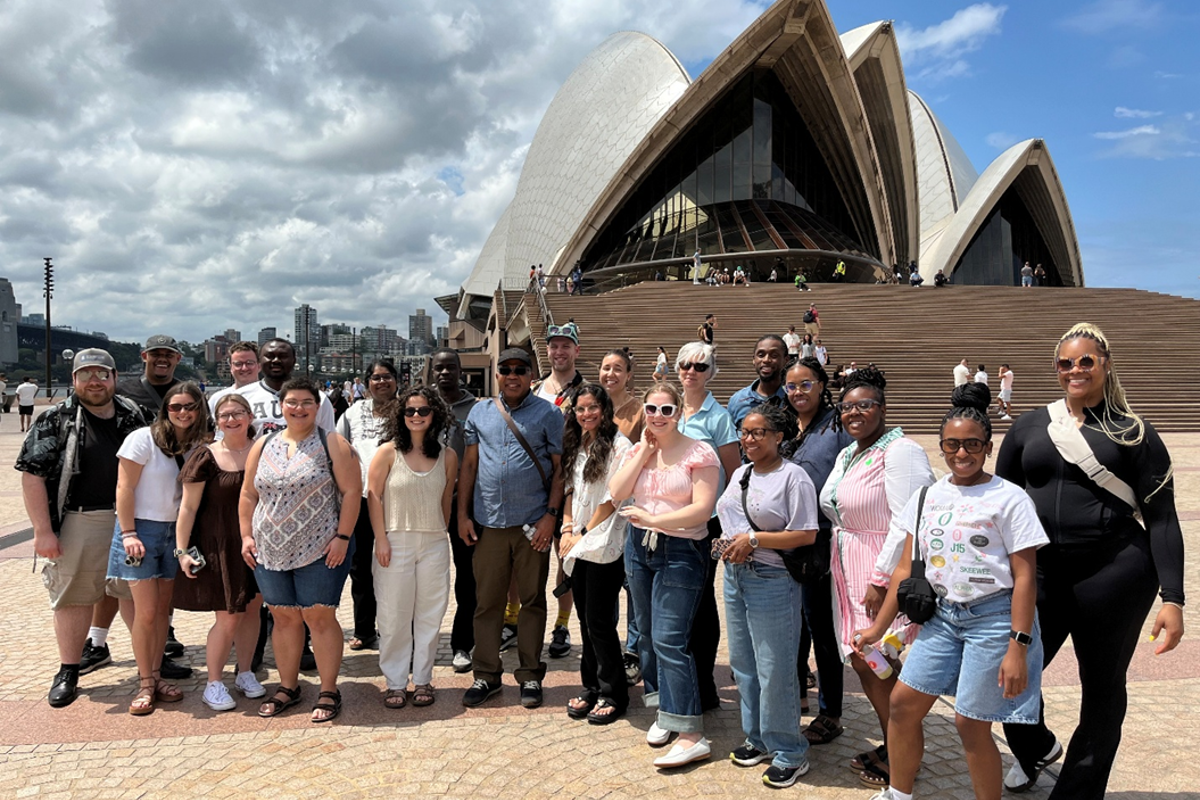
Because of the concerns noted above, a “travel course” of twenty-one seminary students from Princeton Theological Seminary (New Jersey, USA) came to North Parramatta, led by Prof. Afe Adogame, from Jan 10–16. This travel course offers theoretical, methodological and empirical (on the ground) insights into how we may understand other cultures.
At United Theological College, North Parramatta, their course of study included presentations by Mikenzie Ling (First Peoples matter), Derya ISRA (migration and Islamophobia), Chris Budden (doing theology on invaded space), and Cliff Bird (climate justice). The group also visited local sites including Nan Tien Buddhist Temple (Wollongong), Aboriginal Housing Company (Redfern), and the Australian Museum.
Feedback from students
Chané M. Jones, Esq. (2nd Year, M. Div., Princeton Theological Seminary): “My time in Australia was enlightening, emotionally compelling, and inspiring. As a Black woman in America, hearing the history of the Aboriginal people—their endurance and resilience—has been truly inspiring and affirming. It has been a reminder that culture does not have to be something that divides but rather can be the source of community through the sharing and expression of identity, belief, and love. This is best seen through the Redfern community.
“The artworks on 'The Block' serve a physical reflection of how the creativity of culture liberates and propels others for the collective good of all. My experience has deepened my interest in learning and understanding the history of indigenous communities and cultures. I am excited to seek out more opportunities to immerse myself in such experiences.”
Ben Drew (MDiv Student, Princeton Theological Seminary): “Our time in Parramatta was restful, illuminating, and challenging. Restful because of the kindly offered accommodations at the Uniting Theological College: I particularly enjoyed being shown the “secret path” to Lake Parramatta, where I walked and ran often during our stay. Illuminating because of the access to the city of Parramatta and to Sydney through public transit and scheduled group outings, which allowed us to see and reflect on both exceptional and mundane aspects of life in these areas. Challenging because in the classrooms of UTC, we were graced with the wisdom of teachers, professors, prophets, and pastors on a variety of crucial topics of importance to NSW, Australia, and to our own homes throughout the world.”
Cynthia Lindsay (MDiv Student, Princeton Theological Seminary): “We are so grateful that United Theological College had opened its doors to us and were incredibly hospitable. Being just a short bus ride away from the downtown area of Parramatta, our group was able to explore the city and see what great restaurants and shops it has to offer. Also, due to the location of the college, we were able to go on beautiful walks around the lake and see some Australian wildlife. What an honor it was to learn from some of the professors and friends of UTC, as well as some of the locals of Parramatta and Sydney. Thank you so much, UTC, for making this trip to Australia an amazing experience for our group!”
Kaylie Crabtree (MDiv Student, Princeton Theological Seminary): “The community at United Theological College in Parramatta were incredible hosts for our stay in Australia. From rich conversations with local scholars to an impromptu worship service in the chapel, UTC was the perfect stop on our journey. We loved exploring the beautiful nature surrounding campus and the many local restaurants downtown. We cannot thank UTC enough for opening their doors and partnering with us on our journey in theological education.”
And of course, the group visited touristy sites – Featherdale Wildlife Park, Three Sisters, Opera House, Bondi Beach, The Gap – but with native and critical historiography and commentary.
They were invited to bear in mind the scars and wounds of the people and the land on this beautiful island. And to also celebrate the creativity and energy around us (e.g, at the Aboriginal Housing Company, and at the Wansolmoana exhibit).
Aotearoa New Zealand
The group moved to Aotearoa New Zealand from Jan 16–22, where they were hosted by Te Aroha Rountree (President, Methodist Church in Aotearoa NZ), Emily Colgan (Acting Principal, Trinity Methodist Theological College), Andrew Picard (Acting Principal, St. John’s Theological College), Maungarongo Tito (Maori guide), and their whanau.
The local presenters at Aotearoa included Wayne Te Kawaa (Maori cultures), Reni Maiava (migrant cultures), ‘Elisapesi Havea (climate justice), Paul Reynolds (takatapui/rainbow cultures), Maungarongo Tito (Maori practices), and others. They also visited Waitangi and surrounds, Turagawaewae, and Hobbiton!
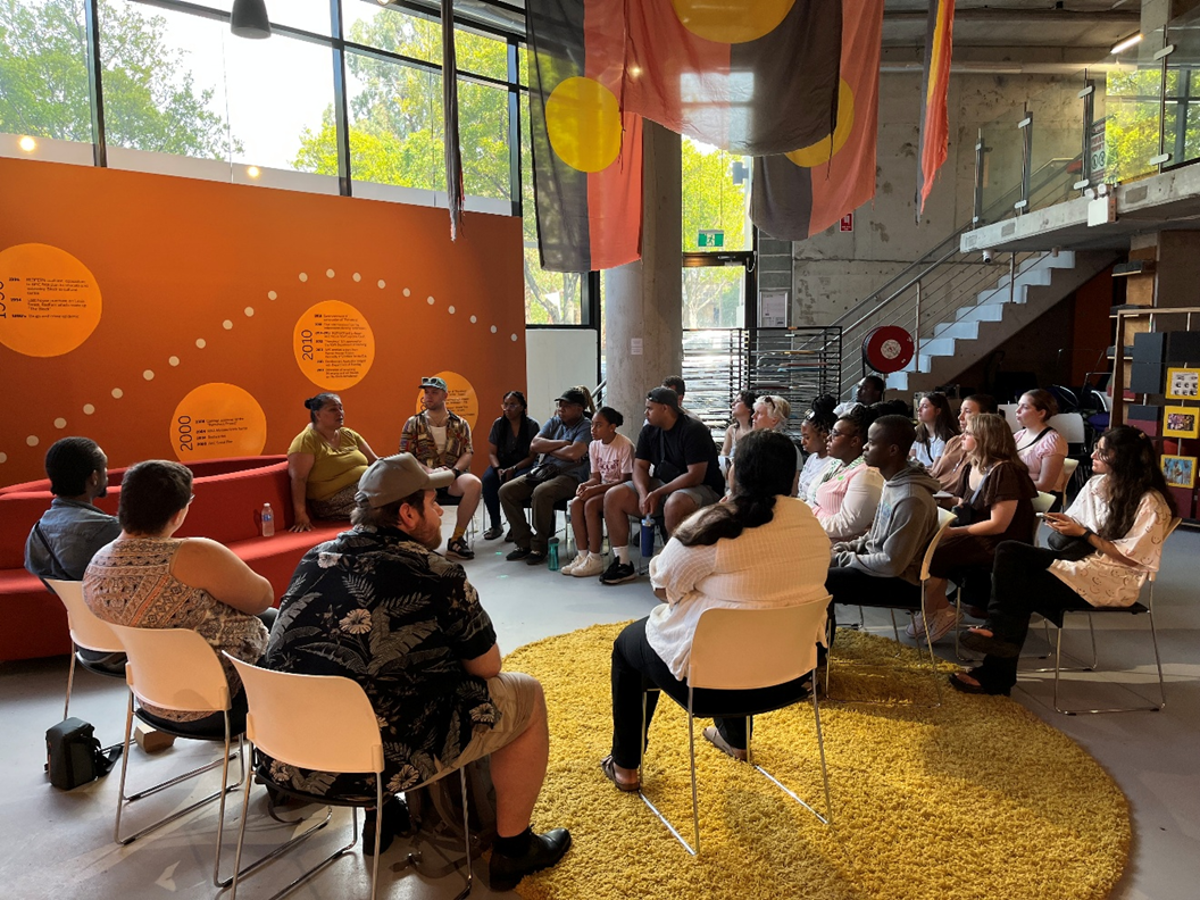
The Princeton students were introduced to the art of “changing the data” by Lani Tu’itavake at the Aboriginal Housing Company, Redfern.