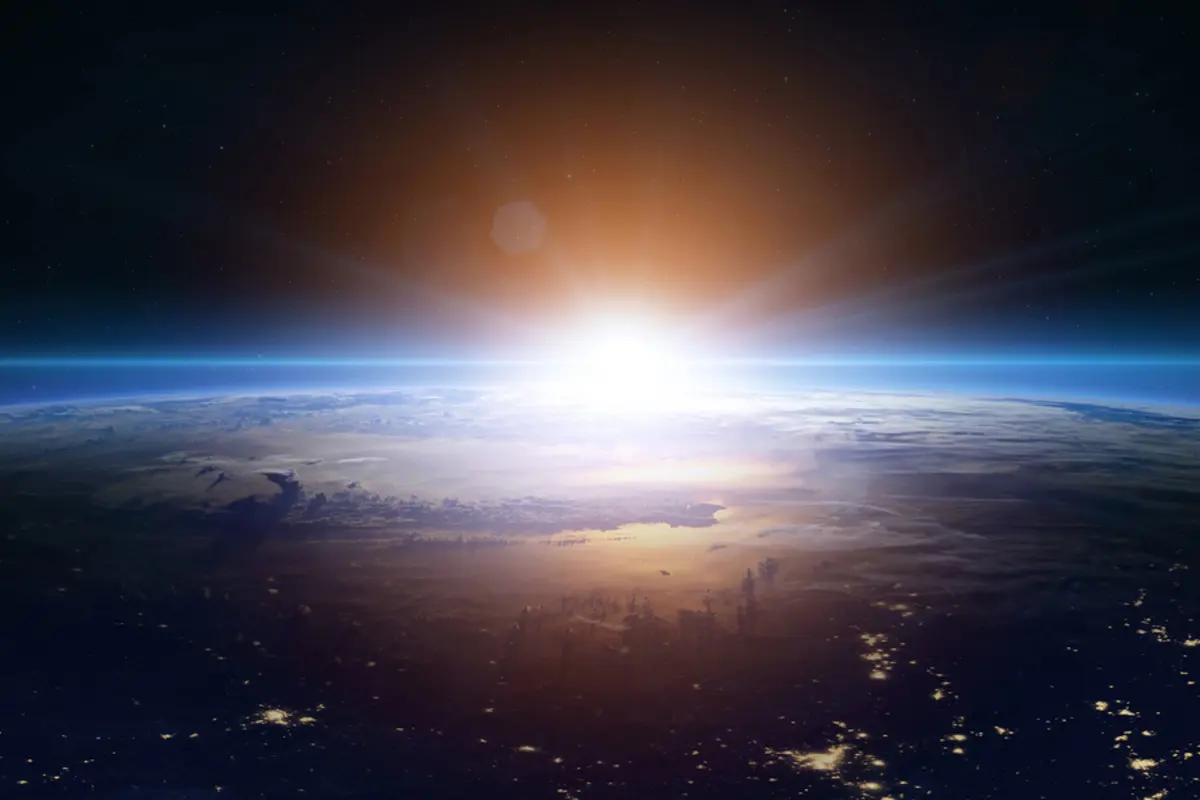
A New Heaven and a New Earth
As we move into Advent and Christmas, and when we read from Revelation at the beginning of the new year, we recall God’s hope for us, and our hope in God.
I heard Nelson Mandela speak in 1991 at a prayer service for South Africa. I sat up all night a few months earlier watching live coverage of his release from prison. Perhaps you did too. The service was in Sydney’s St Mary’s Cathedral. I’m surprised I was there. I wasn’t very prayerful then. I’m still working on it now! Yet I’m glad something drew me in. It was the first time I understood what it means to be sustained by hope.
It was also the first time I gained any sense of meaning in these words from the book of Revelation, which are our lectionary reading for New Year’s Day this summer:
Then I saw a new heaven and a new earth, for the first heaven and the first earth had passed away… And I saw the holy city, the new Jerusalem, coming down out of heaven from God… And the city has no need of sun or moon to shine on it, for the glory of the Lord is its’ light ... Then the angel showed me the river of the water of life, flowing from the throne of God … On either side … was the tree of life… and the leaves of the tree are for the healing of the nations.
The prayer service was deeply moving. Beautiful hymns were sung and magnificent prayers were offered. It was all wonderful. Yet I was captivated by the words of Nelson Mandela, a prisoner on Robben Island for 27 years and sustained only by the hope of change in his country, and the words of John the Apostle, a prisoner on the Island of Patmos, who was not far from death at the time of his Revelation.
John had a vision of God’s new creation. He knew, as did Mandela, that holding faithfully, confidently, even tenaciously to what we hope for is the way to endure all hardship. I sat below the grand windows and arches of St Mary’s. I listened to Mandela’s hope (and courage) and his description of how the steadfast commitment of many churches to justice was a key reason for change in South Africa. And then I heard John’s vision of a world made new. I heard those words not only with my ears but somewhere deeper than that – for the first time.
I wasn’t overwhelmed but was gently taken hold of when I realised that God draws and saves people through the power of hope. It led me to reflect on Christ as the hope of the world. A hope that feels like the river of life itself. Healing for us. Healing for the nations. Christ is our hope and our salvation. John seemed to know that human language is incapable of expressing the reality of eternal things. Yet rather than be paralysed by those limits, he is set free by his inspired imagination to portray the wonder of the Gospel in a masterpiece of hope. His vision is that, in the end, we meet the beginning.
This is where the inspiration to hope lies. Rather than saying I am making all new things, God says in John’s vision, ‘See, I am making all things new’. A small difference in wording but a huge difference in meaning. God’s hope is in this world and God seeks to reconcile and renew it, and us. Creation will not be replaced by a ‘new’ world. Waiting at the end of our hopes is the renewal of life. This world is not dispensable.
I once thought of these visions as daydreaming. Now I think of them, and the hope they inspire, as more important than anything else in all the Scriptures. The words of Mandela and, most importantly, the words of Revelation brought an end to my adjustment to what is and, as I think back, were the beginning of my decision (a hopeful decision) to live for what might be. Hope is the way God stirs. As we move into Advent and Christmas, and when we read from Revelation at the beginning of the new year, we recall God’s hope for us, and our hope in God.
Hope is the way God stirs. As we move into Advent and Christmas, and when we read from Revelation at the beginning of the new year, we recall God’s hope for us, and our hope in God.